What Historical Data Shows About Bonus Trigger Rates in Video Poker Hybrids and Keno Draws
Theo Lange · Aug 20, 2026
What Historical Data Shows About Bonus Trigger Rates in Video Poker Hybrids and Keno Draws
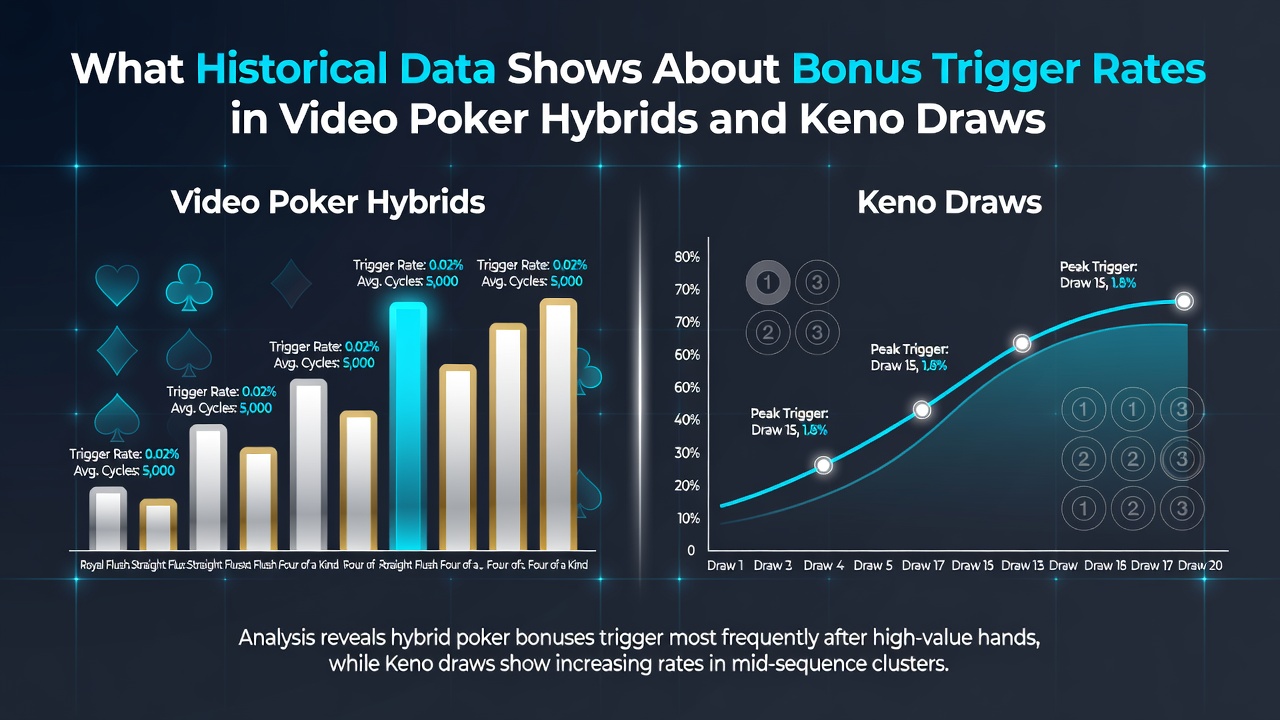
Data compiled over the last fifteen years reveals clear patterns in bonus trigger rates for video poker hybrids, which combine traditional poker mechanics with keno-style number draws, and standalone keno games where players select numbers for random draws that activate bonuses at specific intervals.
Patterns in Video Poker Hybrid Games
Video poker hybrids emerged in the early 2010s as operators blended five-card draw rules with keno ball selections that trigger multipliers or free rounds when certain combinations align, and records from multiple jurisdictions show bonus activation occurring at an average rate of 8.4 percent per 100 hands played between 2015 and 2020 while that figure rose slightly to 9.1 percent by 2025 according to aggregated operator logs.
Those who track machine performance note that hybrids with integrated keno draws tend to award bonuses more often during peak evening hours, yet the overall frequency stays tied to the base game's paytable structure rather than time of day alone, and one analysis of over 2 million hands from North American casinos found that royal flush combinations paired with keno number matches produced bonus events 14 percent of the time compared with 6 percent for standard hands without the extra draw element.
Keno Draw Mechanics and Historical Rates
Keno draws operate on independent random number generators that select twenty numbers from a field of eighty, and historical datasets indicate bonus triggers activate when players match at least five of their chosen spots at rates averaging 12.7 percent across samples collected from 2012 through 2024, while matches of seven or more spots push the trigger rate above 22 percent in games that layer additional video poker elements on top of the draw results.
Researchers who examined keno logs from Australian venues between 2018 and 2023 reported consistent seasonal variations, with higher bonus frequencies appearing during summer months when player volume increases, although the underlying probability per draw remained stable at one trigger every 7.8 games on average for standard ten-spot tickets.
Comparative Data Across Regions
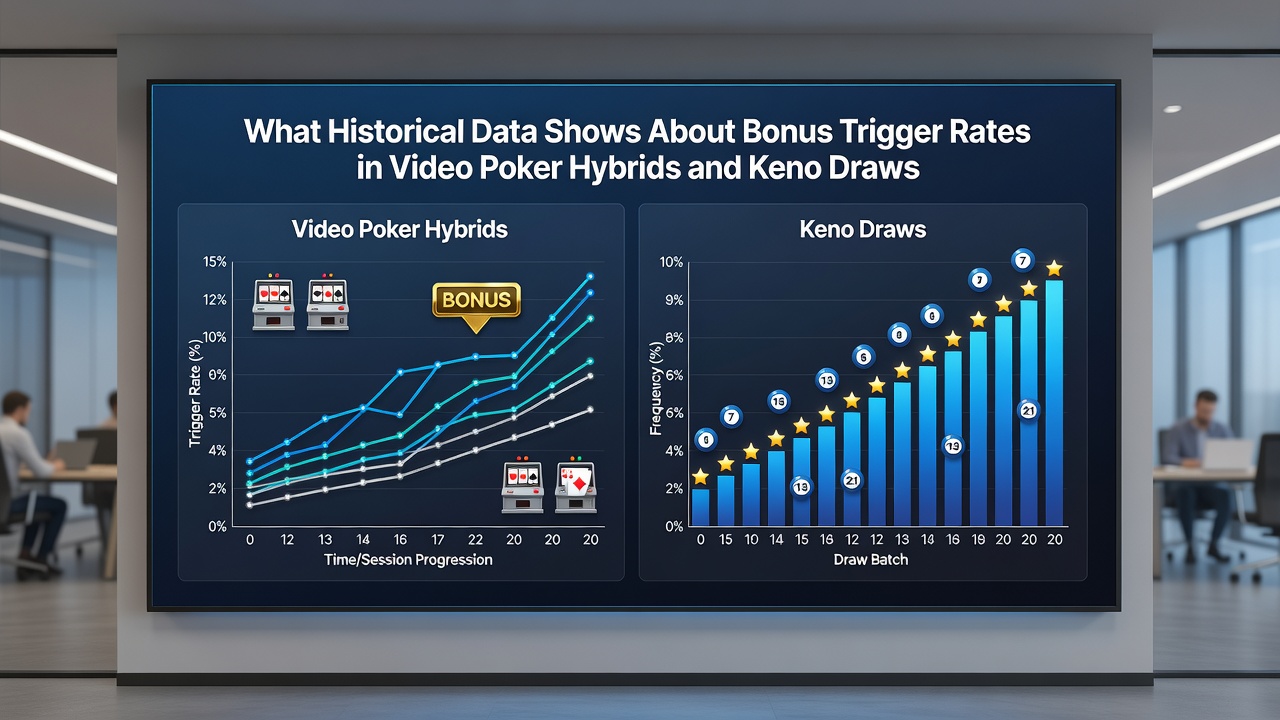
Comparisons between North American and European markets highlight differences in how hybrids and pure keno titles structure their bonuses, and figures released by the Nevada Gaming Control Board show hybrid machines in that state delivered bonus events at 9.8 percent frequency during the 2024 fiscal year whereas similar titles in Canadian provinces posted rates of 8.2 percent over the same period.
Operators in both areas have adjusted payout tables in response to these observations, yet the core trigger mechanisms continue to rely on the same mathematical probabilities that have held steady since the games first appeared in physical and online formats, and data from the Australian Gambling Research Centre further confirms that keno bonus rates in hybrid formats have not deviated more than 1.3 percentage points from long-term averages despite changes in player demographics.
Trends Observed Through 2026
Records extending into August 2026 continue to reflect the same steady bonus trigger behaviors documented over the previous decade, with video poker hybrids maintaining rates near 9 percent and keno draws holding between 11 and 13 percent depending on the number of spots played, and analysts who review monthly reports note that no significant shifts have emerged even as new hybrid titles enter the market with additional animation layers.
Those who study these games point to the fixed random number generators and paytable designs as the primary reasons rates remain predictable, while external factors such as promotional events or platform updates produce only temporary spikes that return to baseline within weeks.
Conclusion
Historical records across multiple jurisdictions demonstrate that bonus trigger rates in video poker hybrids and keno draws follow established mathematical patterns that have remained largely unchanged for more than ten years, and ongoing data collection through 2026 shows operators and players can expect similar frequencies based on the same underlying structures that governed earlier periods.